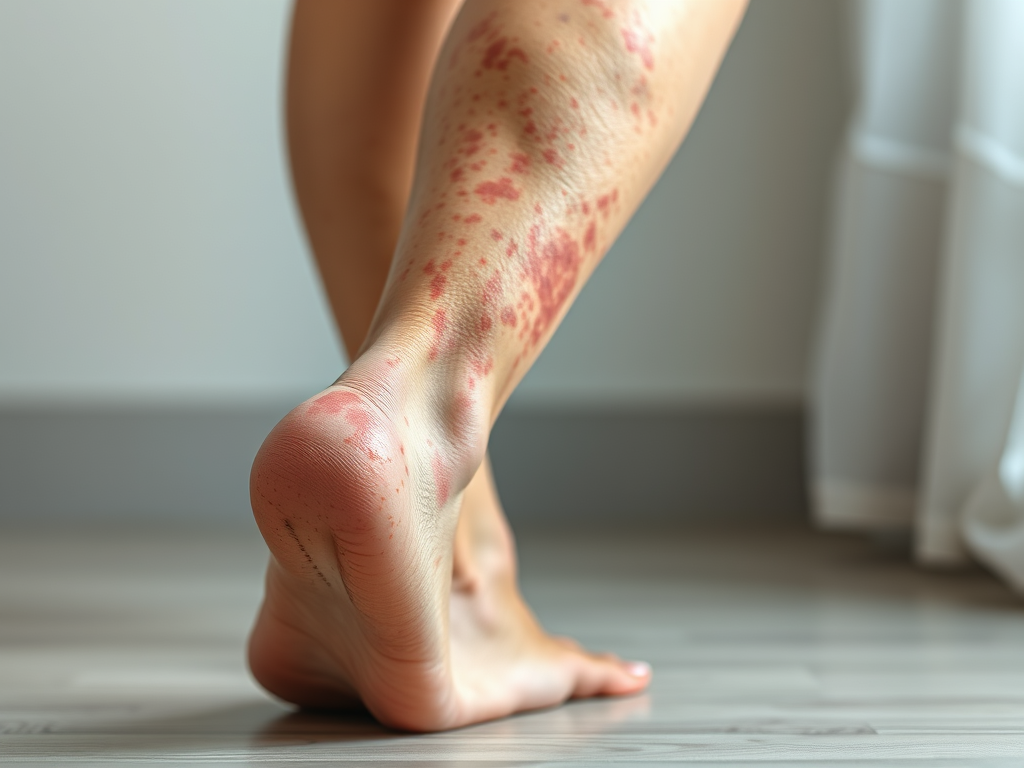
When we talk about fibromyalgia, we typically focus on the widespread pain, the fatigue, the brain fog. But there’s another aspect of this condition that’s often overlooked – the way it can completely transform your relationship with your skin. Looking back now, I realise that some of my earliest warning signs weren’t the aches and pains I’d later become so familiar with, but rather the sudden appearance of skin problems I’d never experienced before.
When My Skin Started Speaking Up
For the first thirty-odd years of my life, my skin was pretty unremarkable. I could use whatever soap, shampoo, or moisturiser took my fancy without giving it a second thought. I never had to scrutinise ingredient lists or worry about reactions. My skin just quietly got on with doing its job.
Then, in the months before my fibromyalgia diagnosis – everything changed. First came the eczema on my face, angry and persistent enough to warrant a trip to a consultant dermatologist. Around the same time, psoriasis appeared on my elbows, knees, and feet like an unwelcome guest.
The timing wasn’t coincidental. These skin issues cropped up precisely when my body was crying out that something wasn’t right, before I even understood what fibromyalgia was, let alone that I had it.
The Fibromyalgia-Skin Connection
It’s fascinating how interconnected our body systems really are. Fibromyalgia isn’t just about pain – it’s a condition that affects how our nervous system processes signals, and our skin, being our largest organ and packed with nerve endings can bear the brunt of this dysfunction.
When I began to look into this topic, I found that Fibromyalgia Action UK cited a study showing that around 50% of people with fibromyalgia suffer with skin problems. Issues can include skin sensitivity, developing rashes or conditions like eczema, psoriasis, or dermatitis seemingly out of nowhere.
There are several reasons why this might happen:
Our overactive nervous system can trigger inflammatory responses throughout the body, including in the skin. The chronic stress that comes with living with a painful condition can wreak havoc on our immune system. Sleep disruption, a hallmark of fibromyalgia, affects our skin’s ability to repair and regenerate itself. Even the medications we take for fibromyalgia can sometimes cause skin reactions.
Living with Sensitive Skin
The practical impact of developing sensitive skin later in life is more significant than you might expect. Suddenly, that trusty soap you’ve used for years feels like sandpaper. The moisturiser that never caused problems now leaves your skin red and irritated. Even laundry detergent becomes a potential enemy.
I’ve had to completely overhaul my skincare routine and become something of a detective when it comes to reading ingredient lists. Products that are suitable for sensitive skin have become my new normal, and I’ve learned to stick with brands and formulations that work rather than experimenting with new products for the sake of it.
The psoriasis on my elbows, knees, and feet requires ongoing management. Some days it’s barely noticeable, other days it flares up and demands attention. I’ve learned to recognise my triggers – stress being a major one – and have developed a routine of medications and moisturisers that help keep it under control.
Managing Skin Sensitivity with Fibromyalgia
If you’re dealing with newfound skin sensitivity alongside fibromyalgia, here are some strategies that have helped me:
Simplify your routine. When your skin becomes reactive, less is often more. Strip back to gentle, fragrance-free basics and gradually introduce new products one at a time so you can identify any culprits.
Read labels religiously. Look for products specifically formulated for sensitive skin and avoid common irritants like fragrances, alcohol, and harsh preservatives. Your skin will thank you for the extra attention to detail.
Keep a skin diary. Track flare-ups alongside other fibromyalgia symptoms, stress levels, diet changes, or new products. Patterns often emerge that can help you identify and avoid triggers.
Don’t ignore persistent problems. If you develop new skin conditions, especially if they’re severe or spreading, see your GP. Early intervention can make a significant difference in managing conditions like eczema or psoriasis.
Consider the stress connection. Since stress can trigger both fibromyalgia flares and skin problems, finding effective stress management techniques can benefit both conditions. What helps your overall fibromyalgia symptoms may well help your skin too.
Be patient with treatments. Skin conditions often take time to respond to treatment, and what works for one person might not work for another. Don’t get discouraged if the first approach doesn’t work – there are usually alternatives to try.
Choose clothing with care. I’ve learned that natural fabrics like cotton, bamboo, and linen are my best friends – they’re gentle and breathable, unlike synthetic materials that can feel like sandpaper against hypersensitive skin. Loose-fitting clothes have become essential too especially when the psoriasis on my knees flares up.
The Bigger Picture
Developing skin problems as part of fibromyalgia can feel like adding insult to injury – as if dealing with chronic pain and fatigue wasn’t enough. But understanding the connection between these conditions can be empowering. It validates what you’re experiencing and reminds you that these aren’t separate, unrelated problems but different manifestations of the same underlying condition.
It’s also a reminder of how complex fibromyalgia really is. This isn’t just a condition that affects our muscles and joints – it’s a whole-body experience that can impact everything from our sleep to our skin. Recognising this can help us approach our health more holistically and ensure we’re addressing all aspects of the condition, not just the most obvious ones.
For anyone experiencing new skin sensitivities alongside fibromyalgia, know that you’re not imagining it and you’re not alone. Our bodies are trying to tell us something, and sometimes the message comes through our skin first. Listen to what it’s saying, treat it gently, and don’t hesitate to seek professional help when you need it.
After all, taking care of our skin is just another form of self-care, and when you’re living with a chronic condition, every act of kindness towards your body matters.


Great info, much more is needed and every bit of new info helps us all.
LikeLiked by 1 person
Thanks for reading and yes I think it’s an area that’s often overlooked.
LikeLiked by 1 person
Yes, I can imagine that the choice of fabric materials should be a concern for sensitive skin. What matters most is that it feels comfortable to wear.
Thank you for the information.
LikeLiked by 1 person
Indeed, it’s comfort all the way! Thanks for reading
LikeLiked by 1 person