Over the past few months, I’ve been struggling with something new alongside my fibromyalgia: Migraine-Associated Vertigo (MAV).
Unlike what many people think of when they hear the word “migraine”, MAV doesn’t always involve a severe headache. For me, the most difficult symptoms have been dizziness, a feeling of imbalance, and increased sensitivity to visual stimulation. On bad days, even looking at a computer screen can feel uncomfortable, overwhelming and nausea inducing.
As someone who spends a lot of time writing, reading, and generally staring at screens, that has been particularly challenging.
Recently, my swimming coach mentioned FL-41 glasses and suggested they might be worth looking into. I’d never heard of them before, but after doing a little research, I decided to order a pair and see whether they might help.
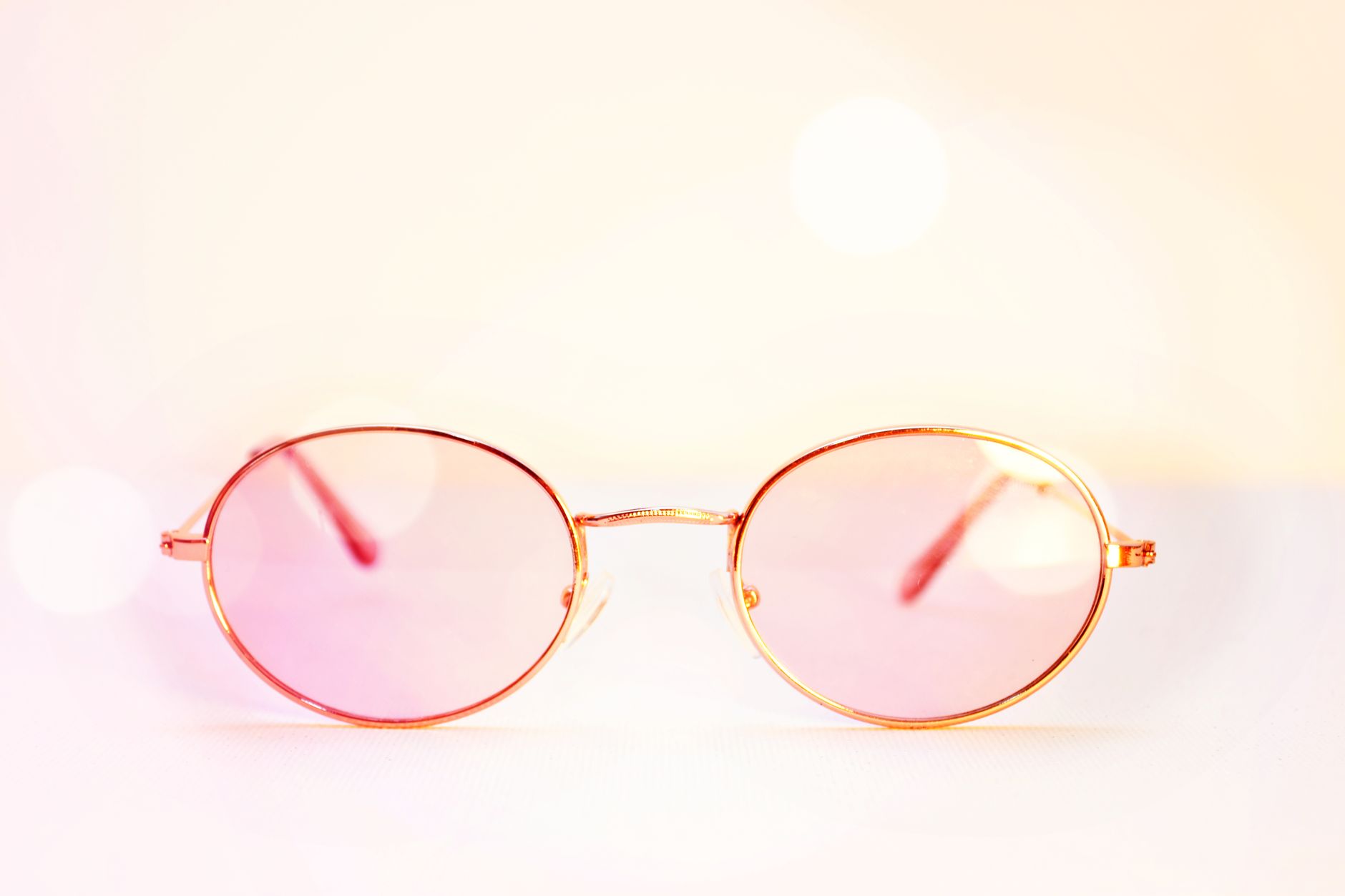
The “FL” stands for fluorescent, as the tint was originally developed to help people who were sensitive to fluorescent lighting. The “41” is simply the designation given to the particular filter and isn’t a wavelength or strength. These glasses have a special rose-tinted lens that is designed to filter certain wavelengths of light, particularly some of the blue-green light that can be problematic for people who experience migraines and light sensitivity. The theory is that by reducing exposure to these triggering wavelengths, the glasses may help lessen symptoms such as light sensitivity, eye strain, and, for some people, migraine frequency or severity.
It’s important to say that they aren’t a cure, and they don’t work for everyone. However, they seem to have developed quite a following within the migraine community, particularly among people who struggle with screen use, fluorescent lighting, or bright indoor environments.
As with many things in the chronic illness world, there often isn’t a single solution that fixes everything. Instead, we find ourselves gradually building a toolkit of strategies, making small adjustments, and seeing what helps. Sometimes those experiments don’t make much difference. Occasionally, though, we stumble across something that genuinely improves daily life.
I’m hoping FL-41 glasses might be one of those things.
My pair only arrived a couple of weeks ago, so I haven’t had a chance to test them properly yet. But if they help me tolerate screens more comfortably during MAV episodes, they’ll be worth every penny.
If you’d like to find out more about FL-41 lenses and the research behind them, the University of Utah’s John A. Moran Eye Center has an excellent overview explaining where they came from and how they’re thought to work. It’s well worth a read if you’re curious.
I’ll report back in a future post once I’ve had a chance to put them through their paces.


